

Relationship therapist for couples in the Blue Mountains or online via Telehealth
Transform your relationship
I help couples improve their relationship by focusing on acceptance and change. I help them understand their relationship patterns, to communicate more effectively, and to build a more secure emotional connection.
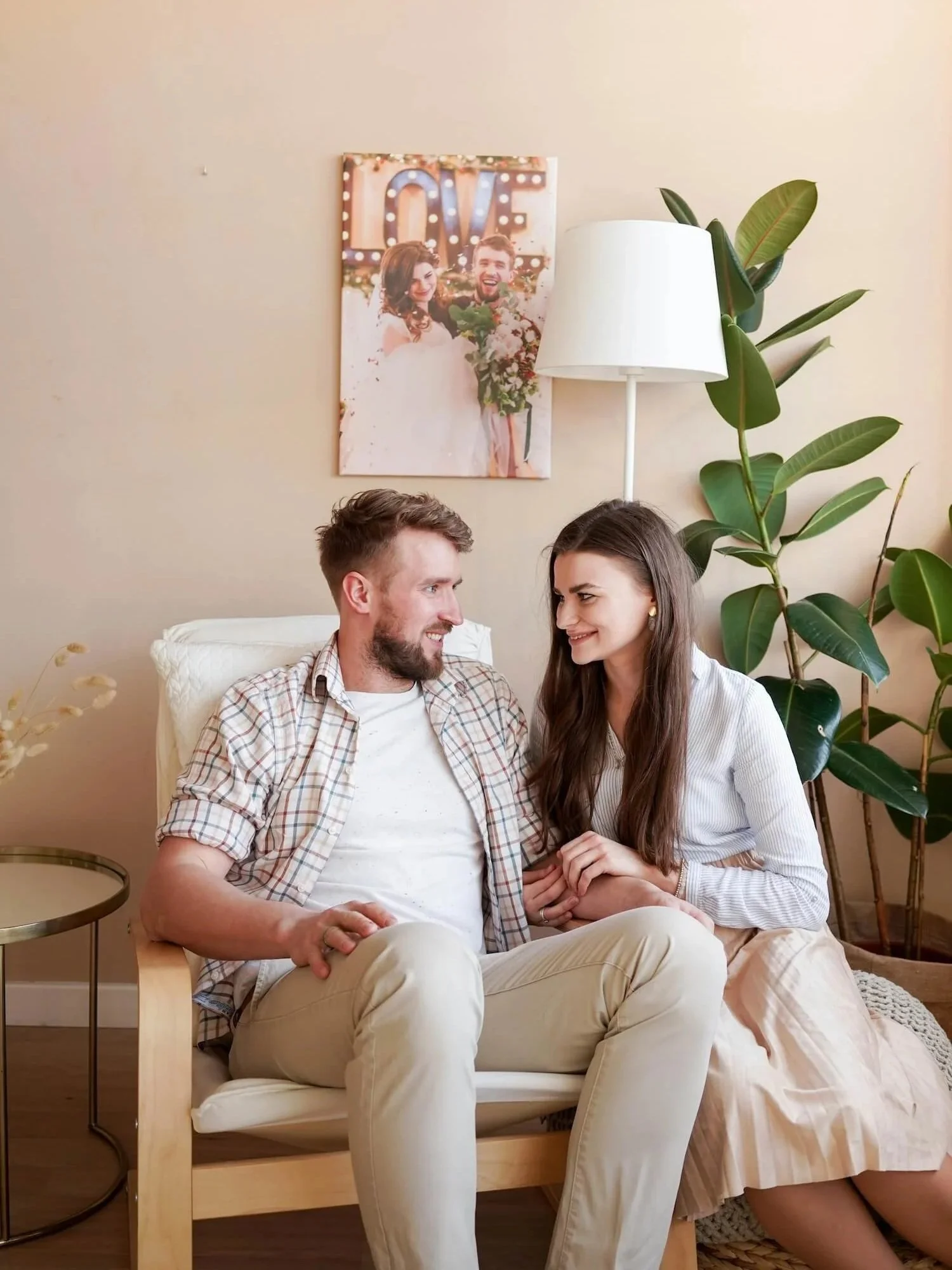
Who comes to couples counselling
Couples come to therapy at very different points in their relationship. Some come early, when patterns are beginning to feel stuck. Others come after years of the same arguments, or when trust has broken down and neither partner knows how to move forward.
Couples counselling is also for relationships that are fundamentally sound but want to go deeper — partners who want to understand each other better and build a more honest, connected way of relating.
How couples counselling helps:
Therapy for couples can help to support emotional closeness and intimacy, improve communication and conflict management skills, reduce relationship distress and negative interaction patterns and enhance empathy and understanding of one another's perspectives. In my clinic, I particularly focus on:
Communication difficulties and recurring conflict
Infidelity and rebuilding trust after a betrayal
Emotional distance, loss of intimacy and sexual difficulties
Differences in parenting approaches
Major life transitions — a new baby, redundancy, illness, retirement
The question of whether to stay or separate
A desire to understand each other more deeply and build a more connected relationship

Key principles of effective couples therapy:
Acceptance: Helping you understand and accept each other's differences, emotions, and sensitive responses to each other's actions.
Change: Helping you modify negative thinking patterns and behaviours that contribute to conflict.
Dual focus: Fostering emotional acceptance, which can make couples more willing to change and collaborate on solutions.
Here and now: Focusing on your current, most pressing issues to identify underlying patterns and develop new coping skills.
The Process: What to expect from couples counselling
Together, we move through a two-phased approached. Phase 1: evaluation is sessions 1-4 and Phase 2: active therapy, from session 5 onwards. Here’s what it looks like:
-
Session 1 (Joint)
We discuss what brought you to couples therapy, your goals, and identify negative patterns playing out in your relationship.
-
Sessions 2 & 3 (Individual)
One-on-one sessions to explore your personal relationship concerns and individual histories.
-
Session 4 (Joint)
I present an evaluation of your conflict themes and explain why your current efforts often get stuck. You'll have the chance to correct my analysis and decide if my evaluation and approach feels right for you.
-
Sessions 5 onwards
Sessions 5 onwards are typically joint. Occasionally, I may suggest a separate individual session if the relationship needs it.
Meet Dan — therapist for couples in the Blue Mountains
I'm a registered psychotherapist and counsellor based in Lawson, in the Blue Mountains of NSW, with postgraduate qualifications in psychology and counselling.
I trained in couples therapy in the 1980s through Interrelate, which provides training, counselling and relationship support services to individuals, couples, families and communities.
I work with couples in the Blue Mountains and across Australia via telehealth.
My Approach to Couples Therapy
I use a framework called Integrative Behavioural Couples Therapy. IBCT is highly effective for couples struggling with chronic gridlock, communication breakdown or general relationship distress.
By shifting the focus away from assigning blame, it aims to foster lasting empathy, allowing couples to heal from past wounds and rebuild intimacy.
My approach to couples therapy helps you move through chronic conflict and emotional distance by combining practical behavioural changes with deep emotional acceptance.
Rather than trying to eliminate differences, I teach you to understand each other's vulnerabilities and to view conflict as a shared challenge.
Location: in-person or telehealth available
My relationship counselling clinic is at 74 View Street, Lawson NSW. I also work with clients across Australia via telehealth. Call 0411 156 015 or book your confidential appointment by clicking on the button below.
How it works
-
Session length
Each session goes for 50 minutes in total
-
Location
In-person at my practice in Lawson, Blue Mountains, or via Telehealth for couples across Australia.
-
Frequency
Most couples find a regular weekly or fortnightly rhythm works best, especially early on.
-
Duration
The timeline is entirely your decision. Some couples achieve their goals in 8 to 12 sessions, while others choose to continue longer.
Book your relationship therapy session in the Blue Mountains or via Telehealth
50-minute session: $220
Note: Medicare does not cover counselling, psychotherapy or couples therapy
Frequently asked questions
-
Fees vary depending on the practitioner and their qualifications. As a general guide, couples counselling sessions typically range from $150 to $300. My fee is $220 for a 50-minute session.
-
There is no single approach that works for every couple. What matters more than the method is the quality of the therapeutic relationship and whether both partners feel heard and understood. My approach draws on cognitive-behavioural therapy, acceptance-based methods, and somatic (body-based) practices — adapted to what each couple brings. The best therapy for couples is the one that helps both partners understand what is happening between them and develop new ways of relating.
-
No. Medicare does not cover couples counselling or couples therapy in Australia. Sessions are an out-of-pocket cost. Some private health funds offer partial rebates for counselling — it is worth checking your policy before your first appointment.
-
Couples therapy asks both partners to look honestly at their own patterns and contributions to the relationship — not just their partner's. That can be uncomfortable. Progress is also rarely linear. Some sessions will feel productive; others will surface difficult things that take time to work through. These are not reasons to avoid therapy, but they are worth knowing before you begin.
-
Couples therapy is not appropriate where there is ongoing domestic violence or coercive control in the relationship. In these situations, individual support is the safer and more appropriate starting point. If you are unsure whether your situation falls into this category, I am happy to have a brief conversation before you book.
-
In my experience, couples often come to therapy later than they needed to — but rarely too late. Even couples who are considering separation can find therapy useful for understanding what happened, communicating more clearly, and making a considered decision about the future. The question worth asking is not whether it is too late, but whether both partners are willing to engage honestly with the process.
-
Neither is inherently better than the other — they serve different purposes and the right choice depends on what you are dealing with. Individual therapy focuses on one person's patterns, history, and wellbeing. Couples counselling works with the relationship itself — the dynamic between two people rather than either person in isolation. Some couples find it useful to have both running alongside each other, with each partner seeing an individual therapist separately while also attending couples sessions together.
-
Yes. I offer couples counselling via telehealth sessions to clients across Australia in NSW, VIC, QLD, WA, SA, TAS, ACT, and NT. Online sessions work in the same way as in-person appointments and are available to anyone who prefers to work remotely or can't attend in person.